Is Russian Manicure Safe?
Myths and facts about Russian manicure safety. Heat sterilization, PREempt CS20 disinfectant and certified technique at Wolf SGX.
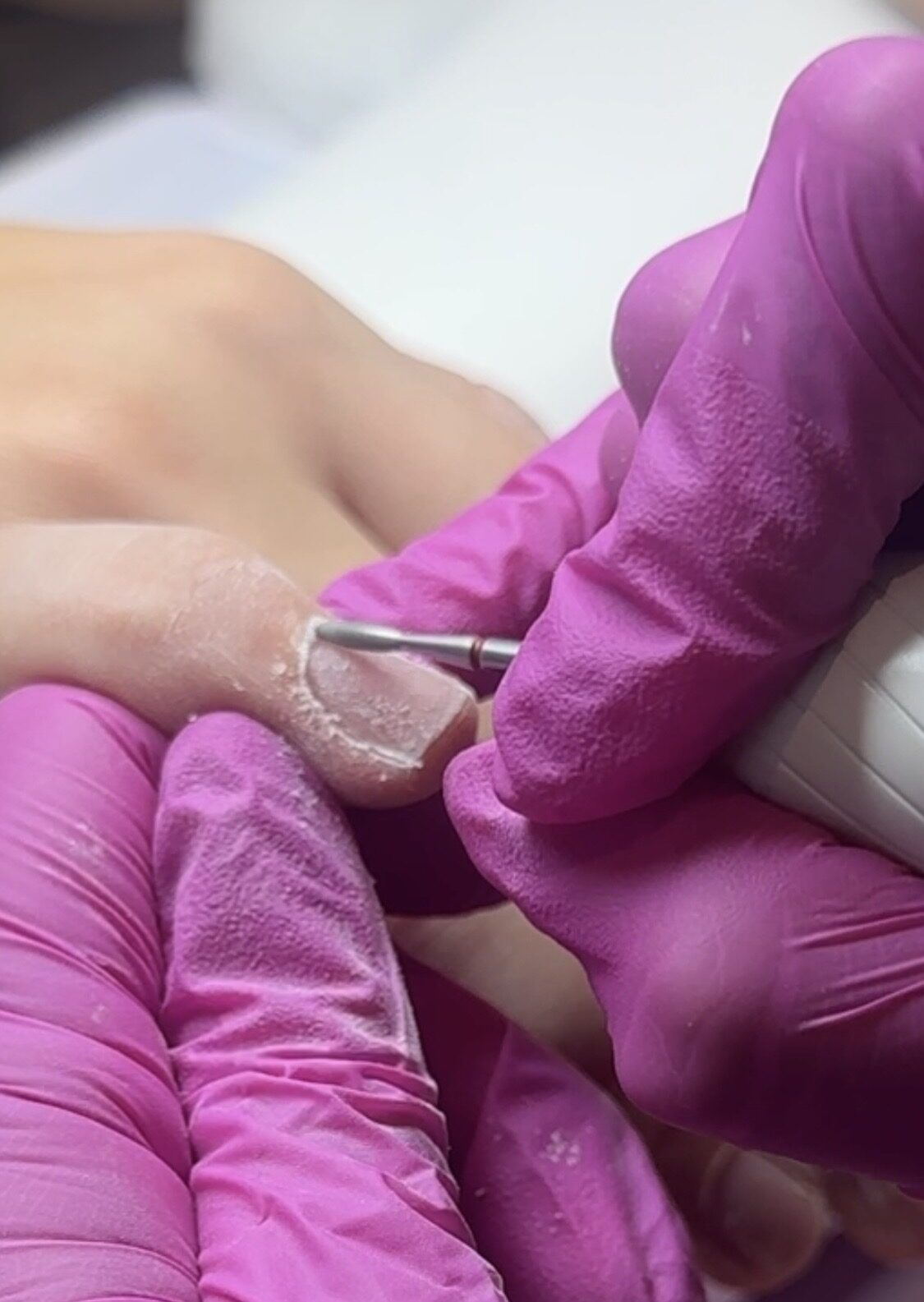
The Russian manicure is a hot topic on TikTok and social media — and not always for the right reasons. Between viral videos showing dramatically cut cuticles and alarming comments about infections, it's natural to wonder: is the Russian manicure safe? The short answer: yes, the Russian manicure is safe when performed by a certified technician with a rigorous sterilization protocol. At Wolf SGX, a private nail studio in Lachine, we've been performing safe Russian manicures for over 3 years using medical-grade protocols. Let's separate the myths from the facts.
What exactly is a Russian manicure?
The Russian manicure, also known as a dry manicure or e-file manicure, is a cuticle preparation technique that uses an electric file (e-file) equipped with specialized bits of various shapes and grits. Unlike a traditional manicure that soaks fingers in water and pushes cuticles back, the Russian manicure works dry to:
- Remove dead skin (pterygium) around the nail plate with millimetre precision.
- Clean the lateral grooves for a perfectly defined nail contour.
- Prepare the surface for better gel adhesion, which extends the life of the manicure.
This technique requires specialized training and certification. It's not something you learn by watching YouTube videos — mastering the e-file takes months of supervised practice to understand the right pressure, working angle, and bit selection for each skin and nail type.
Russian manicure myths
Myth: The Russian manicure damages nails
FALSE. This is probably the most widespread myth, and it stems from videos of unqualified people using an e-file improperly. In reality, when performed correctly by a certified technician, the Russian manicure does not touch the nail plate. The bits used for cuticle work are designed to remove only dead tissue (pterygium and dried eponychium) that naturally accumulates around the nail.
The confusion often arises because some bits are also used to file the nail surface during gel removal or shaping — but these are separate steps with different bits. A qualified technician knows exactly which bit to use, at what speed, and with what pressure for each step of the process.
Myth: Cutting cuticles causes infections
FALSE — with a proper sterilization protocol. This myth has a kernel of truth in a very specific context: if tools aren't properly sterilized between each client, there is indeed a risk of infection. That's why choosing the right salon is crucial.
At Wolf SGX, we use a heat sterilizer together with the high-level disinfectant PREempt CS20 — the same standard used in medical and dental offices. The heat sterilizer eliminates 100% of bacteria, viruses, and spores, and PREempt CS20 disinfects surfaces and instruments. Every metal tool is sterilized and stored in a sealed pouch after each use. Single-use bits are discarded after each client.
The real risk of infection doesn't come from the technique itself, but from a lack of hygiene. With a medical-grade sterilization protocol, the risk is virtually zero.
Myth: Anyone can do a Russian manicure
FALSE. This may be the most dangerous myth. The e-file is a powerful tool that, in untrained hands, can indeed cause damage: friction burns, thinning of the nail plate, cuts to living cuticles, or even damage to the nail matrix.
A Russian manicure requires:
- Certified training specific to e-file use for cuticle work.
- Months of supervised practice to develop the necessary tactile sensitivity.
- Thorough knowledge of nail anatomy — knowing how to distinguish dead tissue from living tissue.
- Mastery of different bits — each shape and grit has a specific use.
TikTok videos showing problematic results almost always come from people who lack this training.
Safety protocols at Wolf SGX
Our clients' safety is our top priority. Here are the protocols we follow at every appointment:
- Heat sterilization and PREempt CS20 disinfectant: all reusable metal tools go through a full heat-sterilization cycle after each use, then are disinfected with PREempt CS20. Every tool set is packaged in a sealed, dated sterilization pouch.
- Single-use items: files, buffer blocks, and certain e-file bits are single-use and discarded immediately after the service.
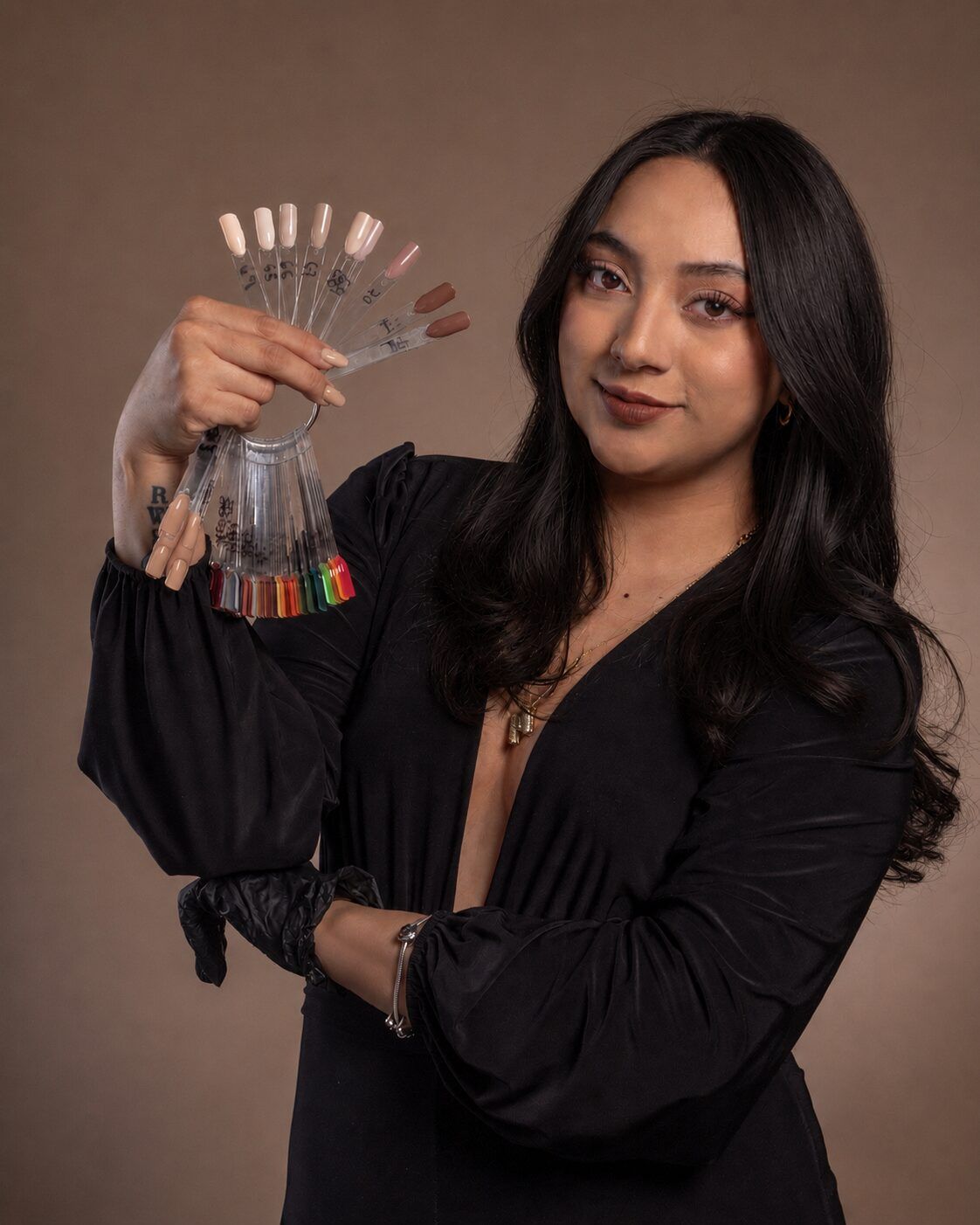
- Certified technician: Mari, founder of Wolf SGX, has over 3 years of experience in Russian manicure and a specialized e-file certification. She regularly trains in new techniques and industry best practices.
- Spotless workspace: the studio is cleaned and disinfected between each client. As a private studio (one client at a time), we have complete control over the work environment.
- Expert e-file technique: appropriate bit selection based on cuticle type, adjusted speed (never too high for cuticle work), light and consistent pressure, controlled movements.
When to avoid a Russian manicure
Even though the Russian manicure is safe in the vast majority of cases, there are certain situations where it's best to postpone or consult a healthcare professional first:
- Open wounds near the cuticles: if you have cuts, deep cracks, or unhealed wounds around your nails, wait until they've fully healed before booking.
- Active nail infections or fungus: in case of a fungal or bacterial infection, or paronychia (infection around the nail), consult a doctor or dermatologist before any manicure service.
- Extremely thin or damaged nails: if your nails are very weakened (for example, after a poorly done gel removal or illness), a prior consultation with your technician is recommended to adjust the protocol.
- Post-chemotherapy: chemotherapy treatments can affect nail health and the surrounding skin. Wait for your doctor's approval before resuming manicure services.
In all cases, don't hesitate to share your situation with Mari during the consultation — she'll know how to advise you and adapt the service accordingly.
How to choose a qualified technician
If you're looking for a Russian manicure technician, here are the criteria to check to make sure you're in good hands:
- Ask about certification: a qualified technician should be able to show their e-file certification. Don't hesitate to ask — any serious professional will be proud to share it.
- Ask about sterilization: ask how tools are sterilized. The answer should mention heat sterilization with a high-level disinfectant like PREempt CS20. If they only mention an ordinary disinfectant spray or UV, that's not enough.
- Read client reviews: check Google reviews and social media comments. Look specifically for mentions of hygiene, professionalism, and quality of cuticle work.
- Visit the workspace: a clean, well-organized studio or salon is a reliable indicator. The heat sterilizer should be visible and tools stored in their sterilization pouches.
- Ask about continuing education: the best technicians train regularly. Ask if she takes courses or attends workshops to stay current.
Frequently asked questions about safety
Does the Russian manicure cause bleeding?
No, a properly performed Russian manicure should never cause bleeding. Bleeding is a sign that the technician touched living tissue — which indicates a lack of skill. At Wolf SGX, Mari works exclusively on dead tissue with a precision that guarantees zero bleeding. If you've ever experienced bleeding during a Russian manicure elsewhere, that's a red flag about that technician's qualifications.
Is the electric file dangerous?
No, the e-file is not dangerous in trained hands. It's a precision tool, comparable to a surgeon's scalpel: the tool itself is neither good nor bad — it all depends on who's using it. A certified technician controls the rotation speed (RPM), chooses the appropriate bit for each step, applies the right pressure, and works at the optimal angle. The e-file actually allows for more precise and less traumatic work than traditional hand tools (cuticle pushers, cuticle nippers).
How long does it take for cuticles to grow back?
Cuticles grow back naturally in 2 to 3 weeks, which corresponds to the skin renewal cycle. That's why regular maintenance every 3 to 4 weeks is recommended to keep a clean nail contour and optimal gel adhesion. Over the course of regular appointments, you'll notice your cuticles become easier to maintain — dead skin accumulates less and the prep work goes faster.
Is the Russian manicure recommended for fragile nails?
Yes, and it's actually beneficial. Contrary to what you might think, the Russian manicure is excellent for fragile nails. By cleanly removing dead skin and pterygium, the nail can breathe and grow without obstruction. Additionally, a clean cuticle contour allows for better gel application, which in turn protects and strengthens the natural nail. Many of our clients at Wolf SGX have seen a significant improvement in their nail health after a few months of regular Russian manicures.
Book with confidence
At Wolf SGX, the Russian manicure isn't just a trend — it's a mastered, safe technique that's part of every one of our services. With Mari, a Certified Nail Technician with over 3 years of experience, medical-grade heat sterilization with PREempt CS20 disinfectant, and a spotless private studio, you're in the best hands in Montreal.
Wolf SGX — Private Nail Studio
366, 9e Avenue, Lachine (QC) H8S 3C2
Book your appointment online or contact us on WhatsApp at +1 438 778 7125 to ask questions about our technique and safety protocols. We respond in French, English, and Spanish.
Discover our gel manicure with Russian technique, learn more about Mari and Wolf SGX, or check out our full FAQ for more questions.
Keep reading
More journal articles on techniques and care.
A moment.
For you.
Choose your service, your time, and get your confirmation by email. The studio welcomes you by appointment only.